
Neuroscience
The neuroscience of freeze explained clearly and why freezing is a survival response, not a failure.
Recognize It
How to recognize freeze in the moment and over time.
Manage It
Four gentle practices for coming back to your body and a closing note on healing and nervous system change.
Your Nervous System Series — No. 01 of 04
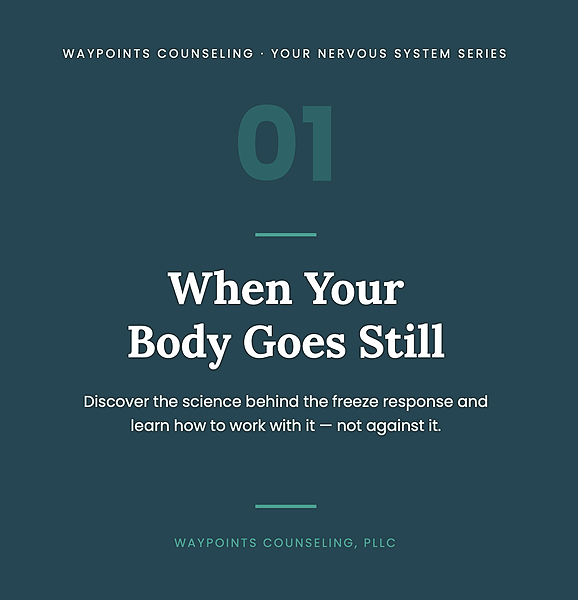
Have you ever gone completely blank in a stressful moment — unable to speak, move, or respond — even when part of you knew you needed to? That's freeze. And it's not a weakness. It's one of your nervous system's most ancient survival strategies. This guide walks you through the science behind the freeze response in plain, accessible language — no clinical background required. You'll learn why your body makes this choice, what it actually feels like (including the subtler, chronic versions most people don't recognize), and what gentle, evidence-informed practices can help you begin to work with it rather than against it. 10 pages. Digest size (5.5×8.5"). Instant PDF download. Written by Erin Evanson-Lass, LCSW-S, EMDRIA Certified EMDR Therapist and EMDRIA Approved Consultant.

About the Author
Hi, I'm Erin Evanson-Lass, LCSW-S, a trauma therapist and passionate advocate for mental wellness and trauma recovery. I specialize in EMDR Therapy Intensives and trauma-focused therapy at Waypoints Counseling in Plainview, Texas. I've dedicated years to treating trauma and developing effective tools to help individuals like you navigate through challenging moments.
Who is this for?
For anyone who has ever wondered, 'Why does my body do that?'

For those currently in therapy
Gives language and framework to what you're already experiencing.

Are you a helper or educator?
This can help you support anyone through hard things.

Clinicians

If you've ever wondered "why does my body do that?" — this series was written for you.
For those currently in therapy
Gives language and framework to what you're already experiencing.
Clinicians
Are you a helper or educator?
This can help you support anyone through hard things.
If you've ever wondered "why does my body do that?" — this series was written for you.
Your nervous system has been trying to protect you. Now you can understand how.
$8.00